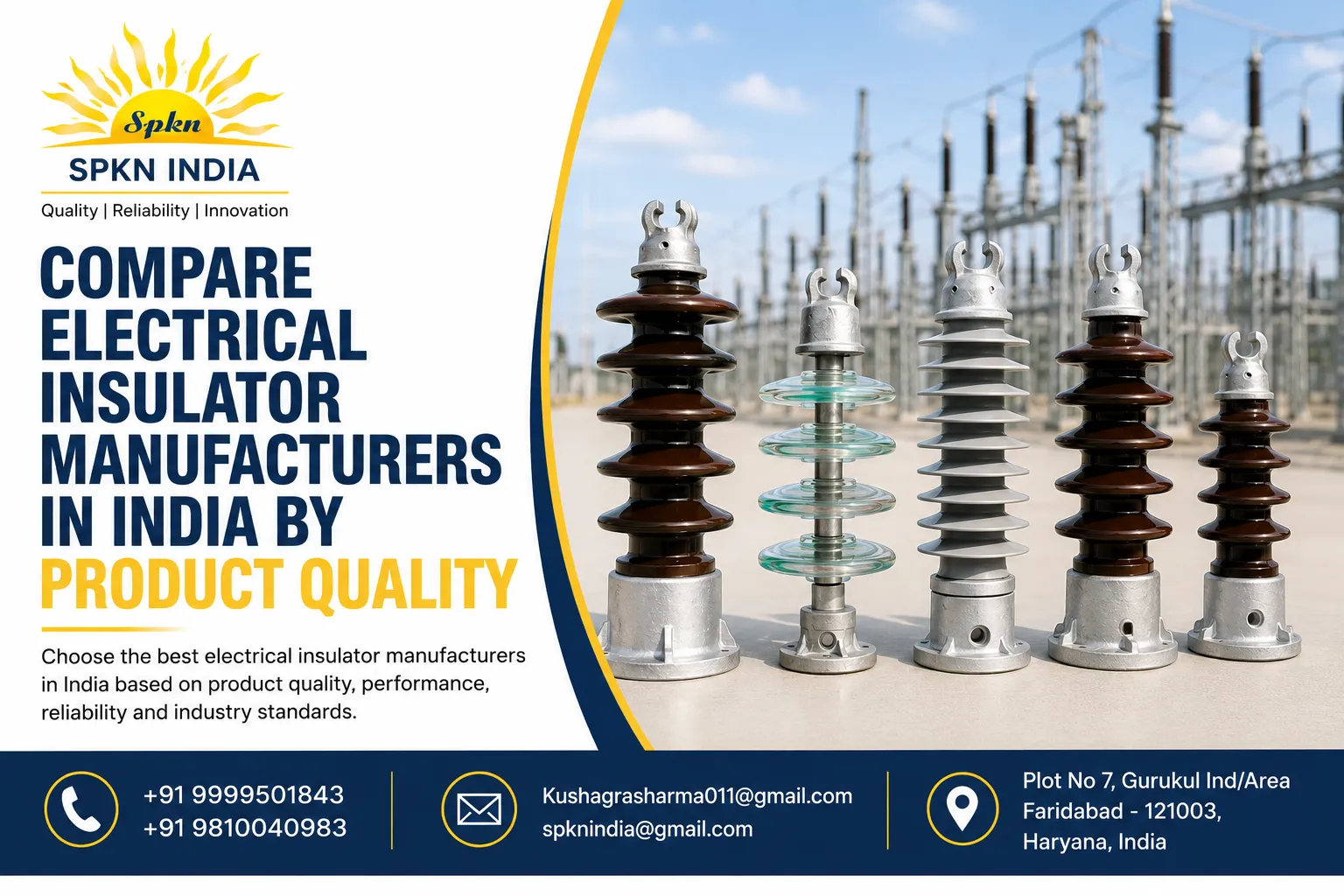
Why Insulator Quality Decisions Matter More Than Price
An insulator sits on a tower or a substation structure for twenty to forty years, often exposed to monsoon humidity, industrial pollution, and temperature swings that most equipment never experiences. When it fails, the consequence is not a minor inconvenience. It is an unplanned outage, a possible fire risk, and in the worst cases, a safety hazard for line crew working nearby.
In my experience walking substation yards across northern India, the insulators that failed early almost always shared three traits: thin creepage margins, inconsistent glaze or polymer coating, and no visible batch testing documentation. None of these show up in a quick visual inspection. They show up after two or three monsoon seasons, which is exactly when most procurement teams have stopped paying attention.
This is why comparing electrical insulator manufacturers in India cannot be a spreadsheet exercise based on unit rate alone. It has to be a technical evaluation.
What Exactly Is an Electrical Insulator
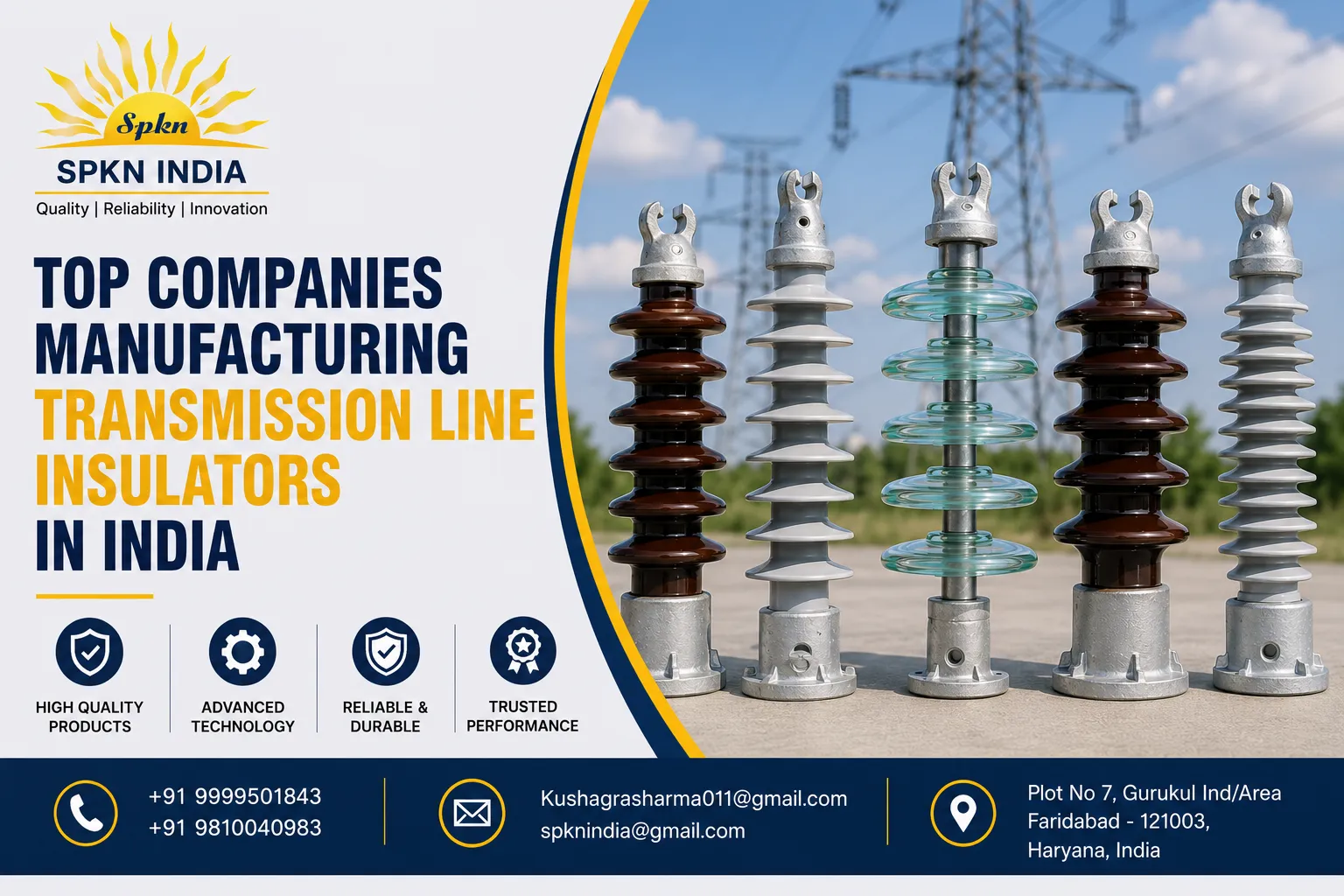
An electrical insulator is a device made from a non-conductive material, typically porcelain, toughened glass, or silicone rubber over a fiberglass core, used to support and separate energized conductors from grounded structures. It prevents current leakage to earth while mechanically holding the conductor in place under tension, wind load, and ice load where applicable.
Insulators are broadly classified by:
- Material type: Porcelain, toughened glass, composite (polymer)
- Application: Pin type, disc type, post type, suspension type, strain type
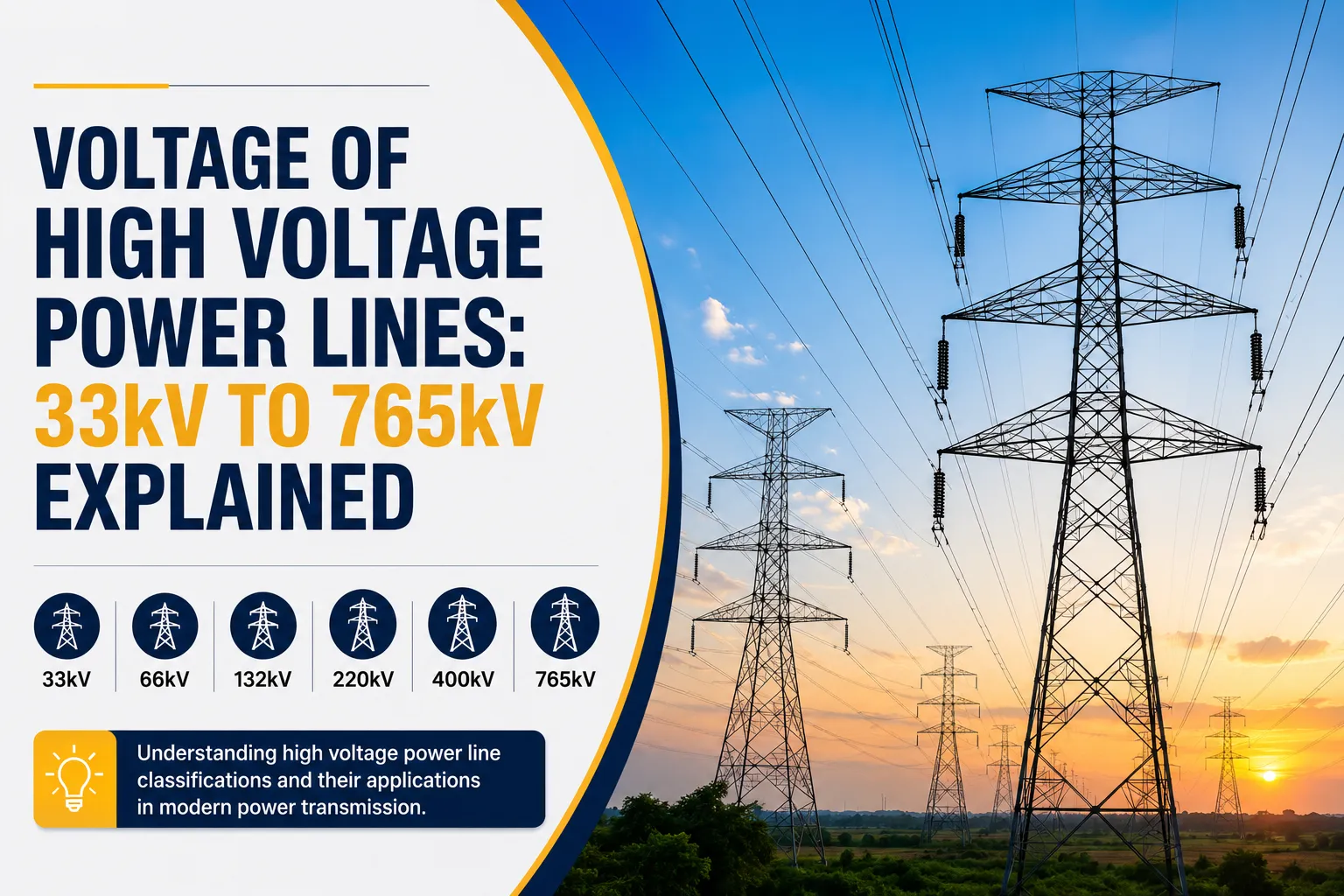
- Voltage class: Low voltage, medium voltage (11kV to 33kV), high voltage (66kV to 220kV), extra high voltage (400kV and above)
Alongside insulators, related products like electrical insulation tape and general electrical insulation material are used for jointing, cable termination, and localized insulation repair. These are a different product category from line and substation insulators but are often sourced from the same industrial supply chain, so procurement teams frequently evaluate insulation tape suppliers during the same vendor assessment cycle.
The Core Manufacturing Factors That Actually Determine Quality
1. Raw Material Grade
Porcelain insulators depend heavily on the clay and feldspar mix used, along with firing temperature control. Composite insulators depend on the silicone rubber formulation and the quality of the fiberglass rod core. A manufacturer using recycled or inconsistent raw material batches will produce insulators with variable dielectric strength, even if every unit looks identical on the outside.
2. Manufacturing Process Control
Firing consistency for porcelain, and vulcanization consistency for silicone rubber, both determine long-term performance. When I tried sourcing samples from three different vendors for a comparative site trial some years back, the difference in surface finish uniformity between batches from the same claimed "specification" was noticeable even without lab equipment.
3. Testing and Quality Assurance
Reputable manufacturers conduct type tests, routine tests, and sample tests as per IS 731, IS 5350, IEC 60383, and IEC 61109 depending on the insulator category. These include:
- Power frequency withstand voltage test
- Impulse voltage withstand test
- Puncture test
- Mechanical failing load test
- Thermal mechanical performance test (for composite insulators)
A manufacturer that cannot produce test certificates on request is not one you should be shortlisting, regardless of quoted delivery timelines.
4. Design Compliance with Creepage Distance Norms
Creepage distance, the shortest path along the insulator surface between two conductive parts, is what determines pollution performance. CEA guidelines and CBIP recommendations specify minimum creepage distances based on pollution severity zones, ranging from light to very heavy pollution. Coastal and industrial belts require significantly higher creepage margins than rural inland areas.
Comparing Manufacturer Quality: What to Actually Look For
| Evaluation Parameter | Low Quality Indicator | High Quality Indicator |
|---|---|---|
| Test Certification | Self-declared, no third party lab | NABL accredited lab reports available |
| Surface Finish | Uneven glaze, visible pinholes | Uniform glaze, no surface defects |
| Creepage Distance | Meets bare minimum only | Matches or exceeds pollution zone requirement |
| Documentation | Vague datasheets | Full IS/IEC compliant technical datasheets |
| Batch Traceability | No batch markings | Batch number and date of manufacture stamped |
| After Sales Support | No technical support post supply | Engineering support for selection and installation |
Porcelain vs Toughened Glass vs Composite Insulators
| Feature | Porcelain | Toughened Glass | Composite (Polymer) |
|---|---|---|---|
| Weight | Heavy | Heavy | Light |
| Pollution Performance | Moderate | Moderate | Good with proper design |
| Failure Detection | Difficult, internal cracks hidden | Easy, shatters visibly on failure | Requires inspection for tracking or erosion |
| Vandalism Resistance | Low | Low | Higher |
| Typical Service Life | 25 to 40 years | 25 to 40 years | 20 to 30 years depending on formulation |
| Cost Consideration | Moderate | Moderate | Higher upfront, lower transport and installation load |
Each type has legitimate applications. Porcelain and glass remain dominant in many DISCOM specifications because of long track records. Composite insulators are increasingly specified for high pollution zones and areas prone to vandalism because of their lighter weight and better hydrophobic surface behavior when correctly formulated.
How to Evaluate a Manufacturer Before Placing an Order
Step 1: Request Type Test Reports
Ask for type test reports from a government approved or NABL accredited laboratory, not an internal test report.
Step 2: Check Manufacturing Facility Credentials
ISO 9001 certification is a baseline. Ask whether the manufacturer has supplied to state DISCOMs, Power Grid, or major EPC contractors previously, and request reference project details.
Step 3: Verify BIS Licensing
For products falling under mandatory BIS certification, confirm the manufacturer holds a valid BIS license for the specific product category and voltage class.
Step 4: Ask for Sample Testing Before Bulk Order
For large orders, insist on sample lot testing at an independent lab before the full purchase order is confirmed.
Step 5: Review Packaging and Transport Standards
Poor packaging causes hairline damage that is not visible until the insulator is under load in the field. A manufacturer that understands this will use proper cushioned crating.
Common Mistakes Procurement Teams Make
- Selecting the lowest quoted vendor without verifying test documentation
- Ignoring creepage distance requirements specific to the installation's pollution zone
- Assuming all insulators of the same voltage rating are interchangeable
- Not asking for batch traceability, which matters if a failure investigation is needed later
- Overlooking the manufacturer's experience with the specific application, such as railway electrification versus standard transmission lines
Advantages and Limitations of Working with Established Manufacturers
Advantages:
- Consistent quality across large order volumes
- Proper documentation for audits and tenders
- Technical support during design and selection
- Better handling of custom voltage class or creepage requirements
Limitations to be aware of:
- Established manufacturers may have longer lead times during peak procurement seasons
- Custom or low volume orders may require minimum quantity commitments
- Not every manufacturer stocks every voltage class, so early technical discussion is necessary
Maintenance and Field Inspection Considerations
Even a well manufactured insulator needs periodic inspection. A basic field maintenance checklist includes:
- Visual inspection for cracks, chipping, or surface tracking
- Checking for contamination buildup in high pollution zones
- Infrared thermography during scheduled maintenance windows to detect hotspots
- Checking hardware fittings for corrosion at the insulator-to-structure connection
- For composite insulators, checking for loss of hydrophobicity or visible erosion on the rubber sheds
Utilities following CEA guidelines typically schedule insulator inspection as part of annual preventive maintenance for transmission assets, with more frequent checks in coastal or industrially polluted corridors.
Where Insulation Tape and Insulation Material Fit Into the Picture
While line and substation insulators handle high voltage separation, electrical insulation tape and other electrical insulation material are used for cable joints, terminations, and repair work at lower voltage points. When evaluating insulation tape suppliers, the same principle applies: check for IS 7809 compliance, dielectric strength ratings, and temperature tolerance rather than choosing based on unit price alone. A weak joint insulation failure can be just as disruptive as a line insulator failure, even though the products serve different functions.
Why Choosing a Trusted Manufacturer Matters
A transmission or distribution network is only as reliable as its weakest component. Insulators are a small line item in a project budget but carry a disproportionate share of the risk if quality is compromised. Working with a manufacturer that maintains consistent process control, provides verifiable test documentation, and understands the specific pollution and load conditions of your project site reduces long-term failure risk significantly more than any short-term cost saving.
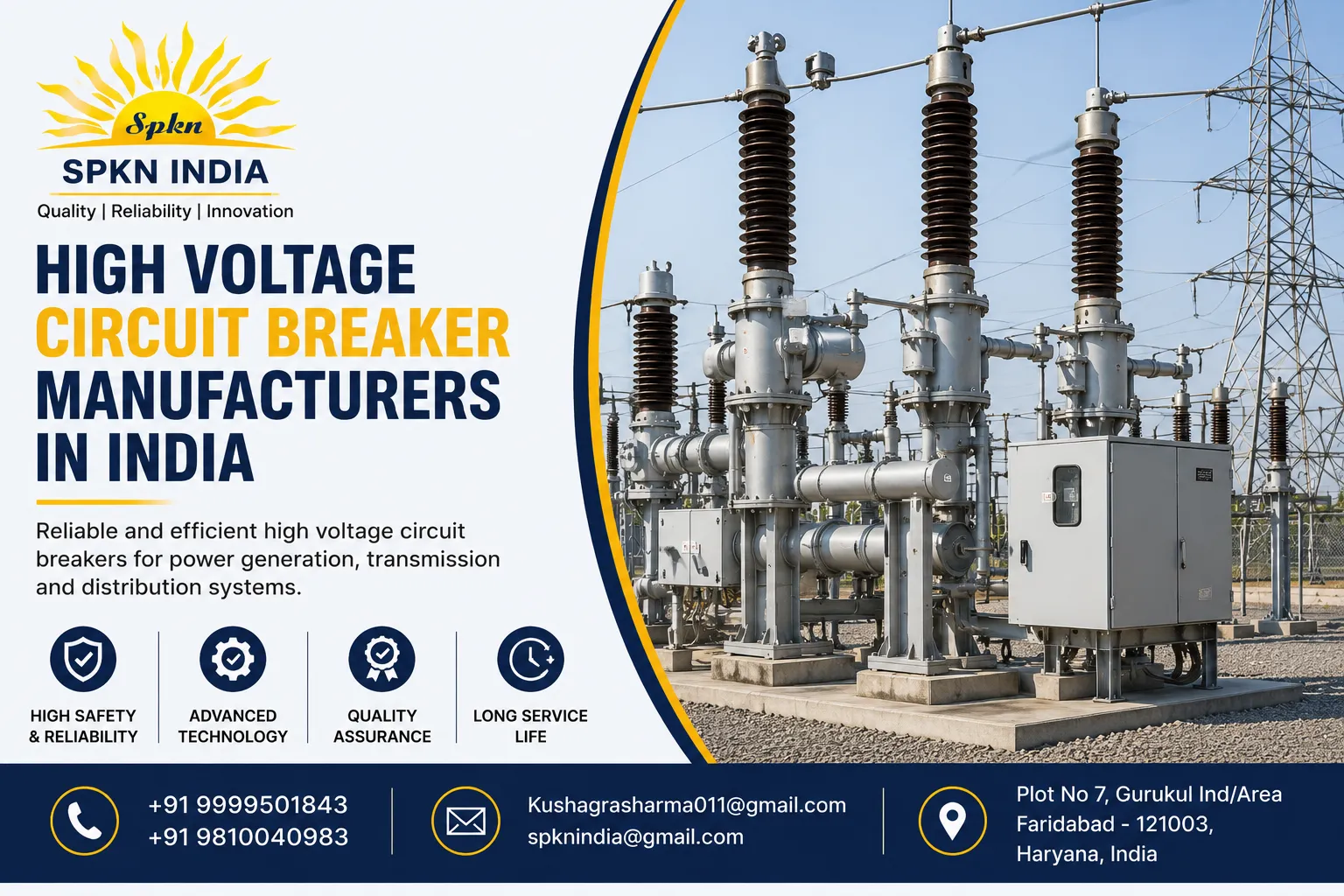
SPKN India manufactures and supplies a range of transmission and distribution equipment, including insulators, Electrical Isolators, Air Break Switches, GOAB Switches, Lightning Arresters, and associated Substation Equipment, with documentation and testing support suited to DISCOM, EPC, and industrial procurement requirements. For projects that also require Drop Out Fuse, Horn Gap Fuse, or Earthing equipment, evaluating a supplier that can support multiple categories under one technical point of contact often simplifies vendor coordination on larger tenders.
Conclusion
Comparing electrical insulator manufacturers in India by product quality comes down to verifiable evidence, not marketing claims. Test certificates, creepage distance compliance, batch traceability, and a manufacturer's willingness to support technical evaluation before the order is placed tell you far more than a datasheet ever will. For engineers and procurement teams working on transmission, distribution, or substation projects, treating insulator selection as a technical decision rather than a purely commercial one is what prevents avoidable failures years down the line. SPKN India works with EPC contractors and utilities on insulator and switchgear requirements and can support technical evaluation for projects that need documented, standards compliant equipment.