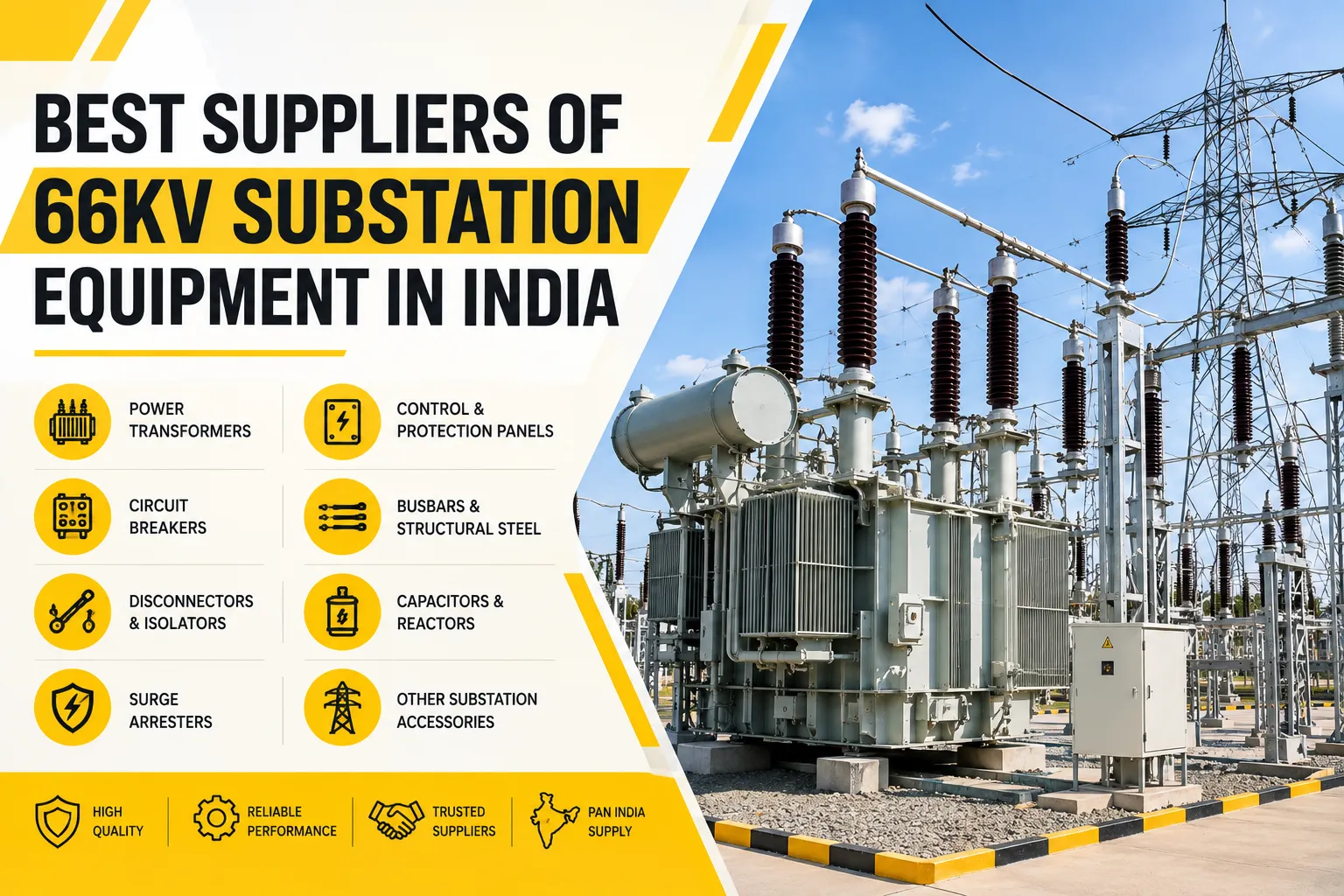
For EPC contractors, DISCOMs, and industrial buyers planning substation upgrades or greenfield projects, the choice of supplier is as critical as the equipment specification itself. A 66kv substation is subjected to high voltage stress, and has to carry critical load with a reliability expected to last 25 to 30 years with minimal maintenance.
This guide is not about listing names of companies. It is about a framework, the same one that procurement teams and EPC engineers work within, to identify credible suppliers of 66kv substation equipment in India. Along the way, we show you how SPKN India fits into that framework and why utilities and industrial buyers across the country turn to us for 66kv line materials and substation hardware.
Why Supplier Selection Matters More at 66kv
A power substation working at 66kv falls in a critical zone. It is high enough voltage that equipment failures can lead to catastrophic safety events, but common enough in India's grid that reliability expectations are extremely high.
Unlike a distribution-level electrical substation working at 11kv, a 66kv substation usually serves as:
- Industrial clusters and manufacturing zones
- Interconnection between transmission and distribution networks
- Bulk supply point for DISCOMs
- Renewable energy evacuation point from wind and solar plants
A single equipment failure here does not simply trip one feeder, but can cascade into a wider outage, disrupt industrial production, and trigger regulatory scrutiny under grid code compliance requirements. That is precisely why supplier's manufacturing discipline, testing rigor and after-sales support matters.
What “Best” Means for a 66kv Substation Supplier
The first step to determining what is best is defining what is best for the given situation. Most often, the buyer will go with who offers the lowest equipment price. But is this a safe option? Can the equipment withstand the working conditions?
Actually, there are a few points that can indicate if the supplier has good credibility and their equipment can perform as promised for many years. Let’s see what they are.
1. Certifications and Testing Discipline
A responsible supplier of electric transmission substation equipment should have ISO 9001:2015 certificate at least, but preferably, they should have more quality certifications. Moreover, type, routine, and acceptance tests should be performed for each item according to the relevant IS and IEC standards, not just sampled inspections.
Ask the potential supplier:
- Do you perform routine tests for each piece of equipment or just sample inspection?
- Can I see your type test certificates for the voltage class I am interested in?
- Are your isolators and switchgear approved by the local utility companies?
And if the seller has some hesitations about these questions, this is not a company you want to choose for a reliable 66kv substation.
2. Manufacturing Track Record at the Right Voltage Class
There is a huge difference between a supplier that can sporadically provide 66kv rated equipment, and a supplier for which this voltage class represents core manufacturing competency.
Look for:
- Proven installation track record across a range of 66kv projects, not just 11kV and 33kV
- Fabrication and testing facilities in-house that are rated for higher voltage classes
- Experience with erecting completely new substations, as well as executing retrofit/upgrade projects
3. Product Range Depth
A power substation is not made up of a single item. A supplier that can support you across your value chain needs to be able to present you with options such as:
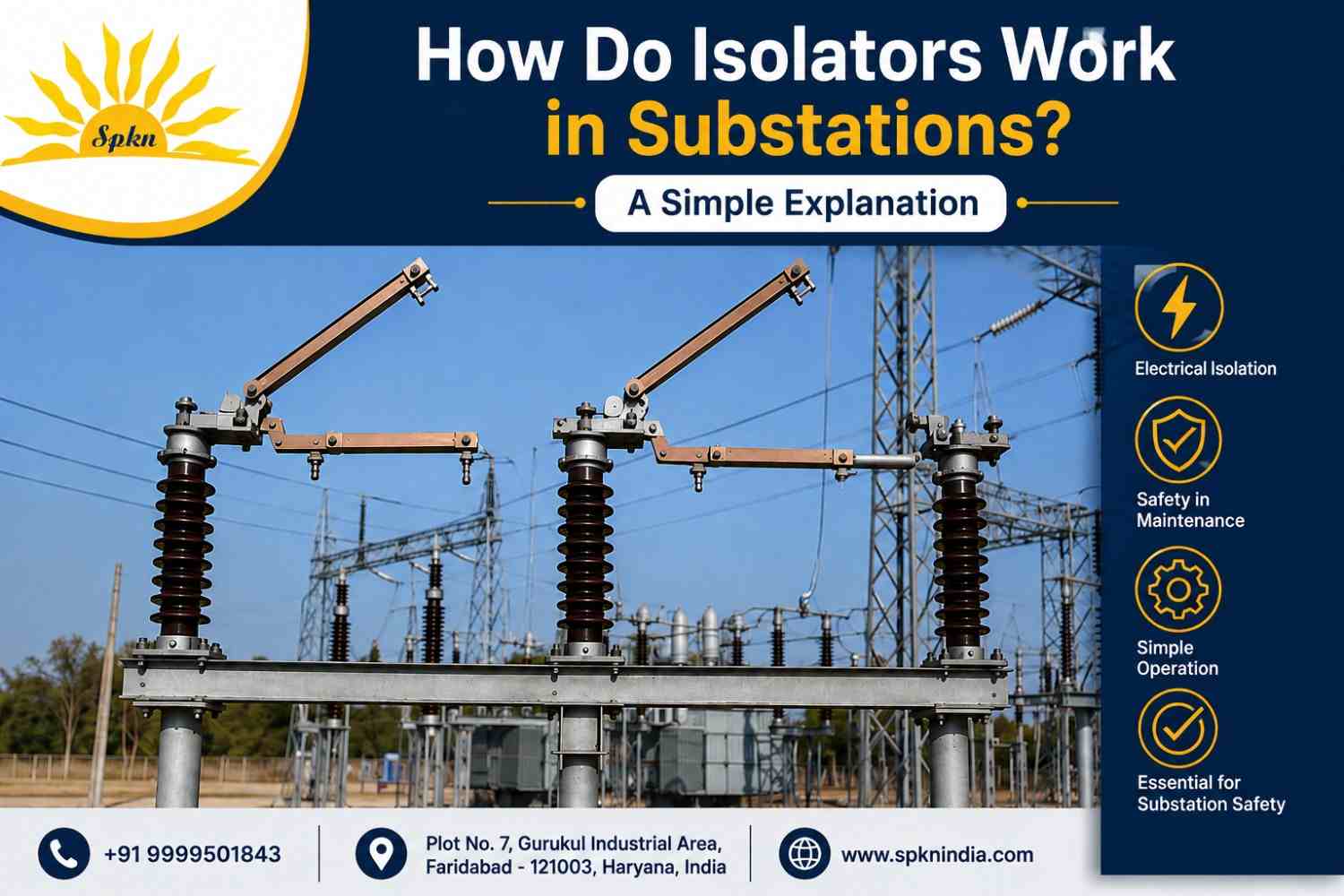
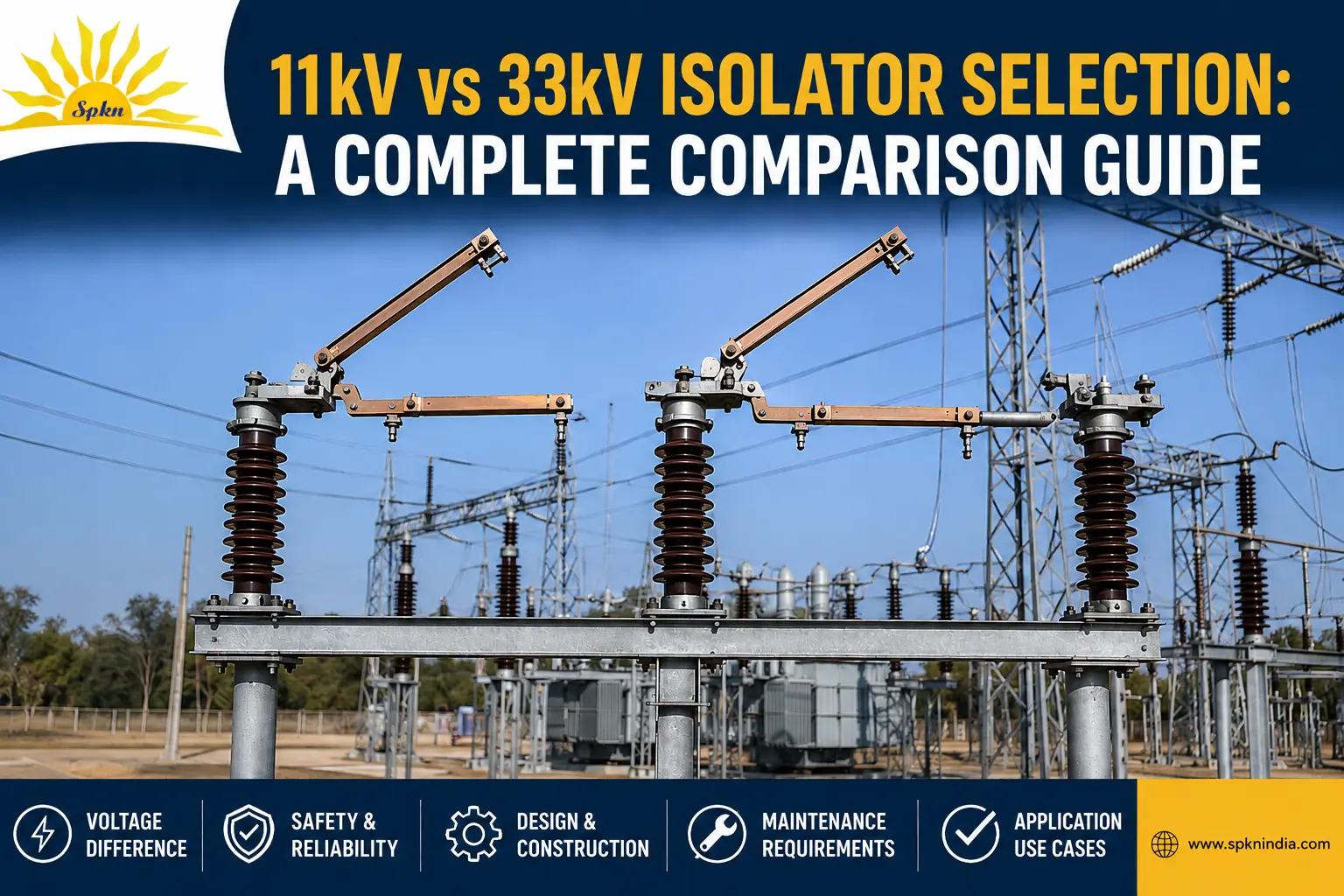
- Isolators (gang operated and motorized) up to 66kv and beyond
- Lightning arresters appropriate to the installation’s risk level
- Horn gap fuses and air break switches for sectionalizing
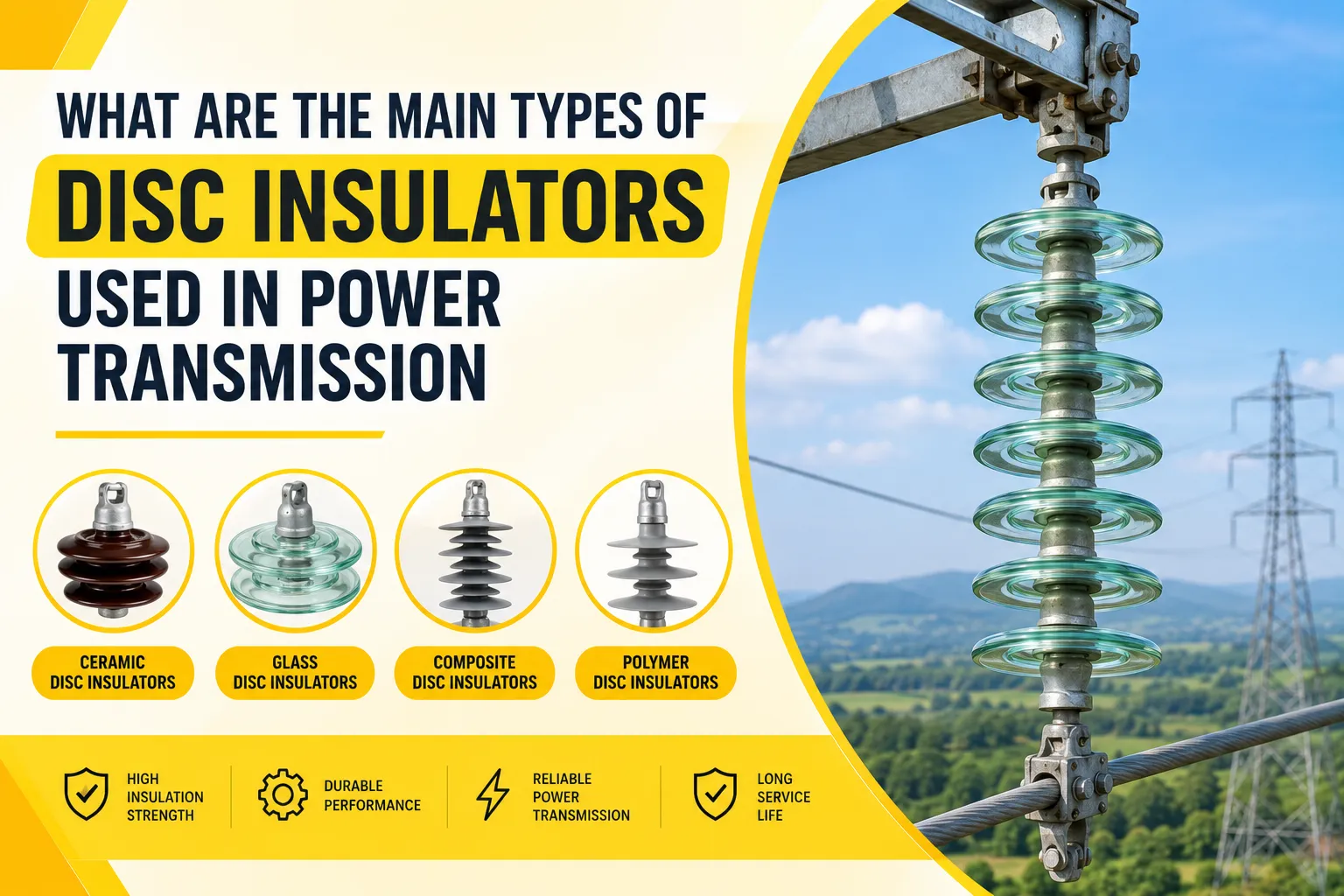
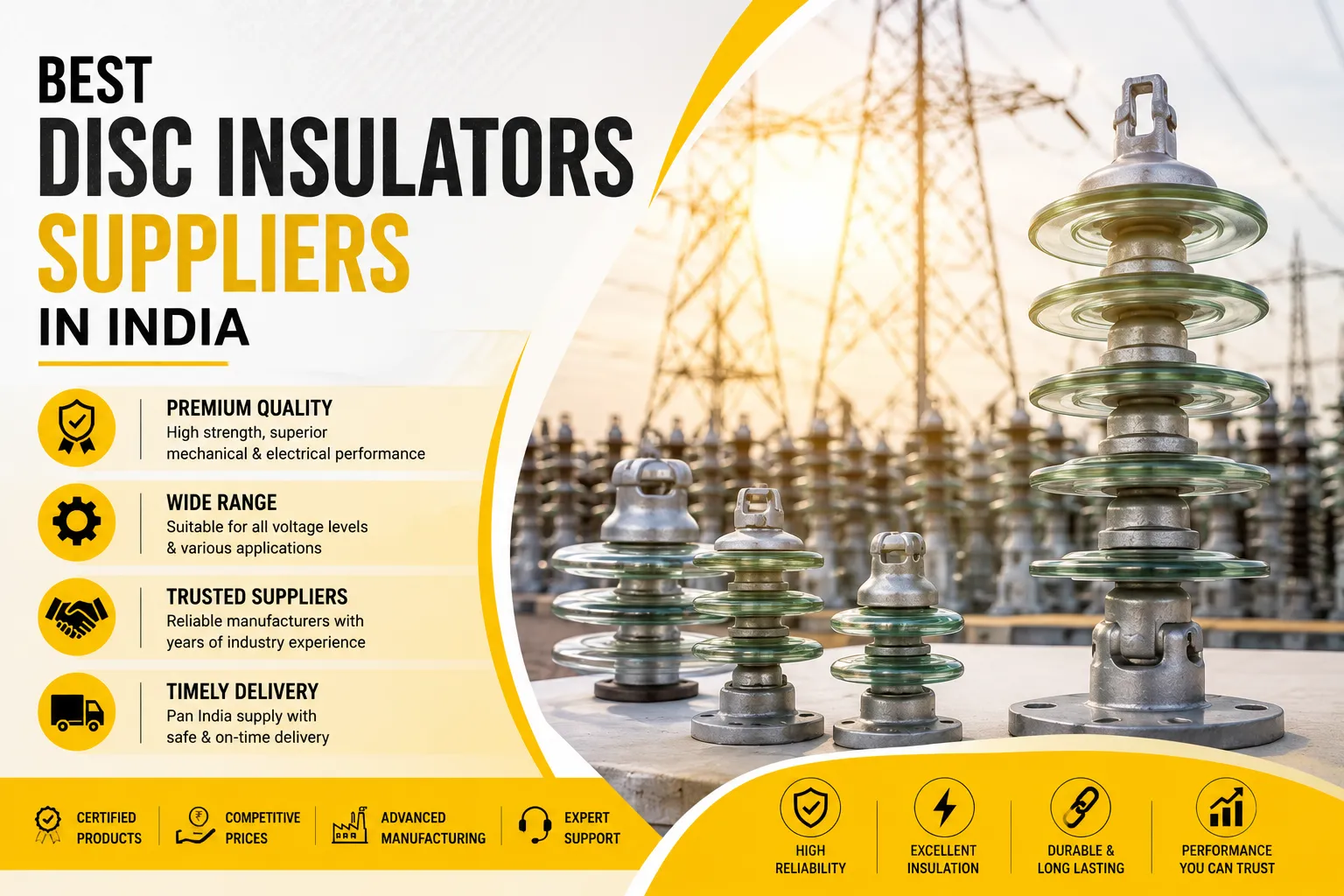
- Polymer and porcelain insulators appropriate to the level of pollution
- Substation gantry structures and connections
- Cable jointing and termination for underground sections
If a supplier only has two or three of these, you’re looking at working with multiple suppliers, multiple timelines and multiple points of potential failure in your supply chain.
4. After-Sales and Field Support
Equipment failure at a live electrical substation is not the moment to discover that your supplier has no local support team. Real field service should include:
- Isolator maintenance and troubleshooting assistance
- Spare parts availability with no long lead times
- Technical guidance on installation for site engineers
- Willingness to visit site during commissioning of critical assemblies
5. Compliance with utility and PGCIL aligned standards
Most of the Indian DISCOMs and transmission utilities have equipment specifications aligned to PGCIL standards and applicable IS codes. Thus, a supplier who has an indigenous understanding of these requirements as compared to modifying standard products for the Indian market would save considerable time at the approval and inspection stages.
Common Mistakes That Buyers Make While Looking For A Substation Equipment Supplier
Mistake 1: Looking only at the cheapest quotation (without considering insulation clearances or material grade or test reports).
The cheap substation equipment often fails during high load, cutting overall costs by half.
Mistake 2: Assume that all isolator and insulator components are interchangeable.
Even though a 33kv component may fit into a 66kv project, the voltage rating needs to be mentioned explicitly.
Mistake 3: Not asking about pollution and environmental clearances for the specific site.
A coastal industrial substation has different insulation and arrestor requirements than an inland transmission yard. This calls for different engineering clearances.
Mistake 4: Not checking the capacity of the supplier to deliver large orders or urgent orders.
Some EPC contractors work on a shoestring budget and have issues with meeting delivery schedules. The buyer runs the risk of missing the commissioning date if the substation vendor cannot deliver gantries, isolators, and insulators on time.
Mistake 5: Don't ask about support and spares.
By the time the buyer discovers that the substation supplier has no technical support and spares, it is too late. All the equipment is already commissioned.
Real World Example: Successful Project
Think of a typical scenario in any Indian industrial township where an EPC contractor is setting up a new 66kv substation to evacuate power from a wind energy park to the closest grid interconnection point.
The requirements are specific:
- Isolators which can survive the vagaries of outdoor maintenance with minimal human intervention
- Lightning arrestors suited to deal with surges on open and elevated terrain as typical of a wind farm
- Gantry structures that are corrosion resistant for longevity
- Strict timelines for delivery as the grid connection activation date is fixed by the utility.
In a project involving all of these, opting for a single manufacturer who can deliver isolators, arrestors, connectors and gantry structures, each tested to the same standard, removes a layer of risk otherwise inherent in a multi-vendor sourcing strategy. Such a scenario points to the benefits of a manufacturer like SPKN India which has in-house competencies across multiple equipment categories and is therefore a more reliable partner than an aggregator of disparate sources.
66kv Substation Equipment Checklist for Procurement Teams
Use this checklist before finalizing any supplier for your next 66kv substation project:
| Criteria | What to Verify |
|---|---|
| Certification | ISO 9001:2015, type test certificates for 66kv rated equipment |
| Testing | Routine and acceptance testing on full batch, not just samples |
| Product range | Isolators, arresters, insulators, connectors, gantry structures under one roof |
| Track record | Documented installations at 66kv and above |
| Standards compliance | Alignment with IS/IEC codes and PGCIL specifications |
| Delivery capability | Realistic lead times for bulk and urgent EPC orders |
| After-sales support | Spare parts, field troubleshooting, commissioning assistance |
| Environmental matching | Site-specific recommendations for pollution and weather exposure |
If a supplier checks most of these boxes consistently, they belong on your shortlist for serious 66kv projects.
Industry Insight: Evolving 66kv Equipment Market in India
Demand for equipment at the 66kv level has been growing steadily in India due to a combination of factors:
- Fast renewable energy capacity additions (wind and solar) requiring intermediate voltage evacuation infrastructure.
- Industrialization in manufacturing corridors requiring high power feeders.
- DISCOM upgrades from 33kv to 66kv infrastructure in areas of higher load density.
- Government emphasis on rural electrification requiring robust sub transmission infrastructure.
This has led to an increase in the number of suppliers of 66kv equipment in India, which makes the criteria in this paper even more important. Not all suppliers who have 66kv equipment listed on their website have the manufacturing and testing capabilities to support it.
Why Choose SPKN India for 66kv Substation Equipment
SPKN India was established with a focus on manufacturing high-voltage line material and substation equipment, with more than ten years of experience in the domain supplying utilities, industrial buyers, and EPC contractors across the country.
Below are the reasons to choose SPKN India for 66kv substation equipment:
- Manufacturing processes are ISO 9001:2015 certified with end-to-end quality checks and control to ensure the best performance of each product.
- The company offers comprehensive testing, including type, routine, and acceptance tests, in accordance with IS and IEC standards.
- A wide range of products is available, including isolators, air break switches, horn gap fuses, arresters, polymer and porcelain insulators, substation gantry structures, and cable jointing kits under one roof.
- More than 1100 successful installations in the country.
- Variety of voltage ratings from 11kv up to 66kv substation equipment, allowing to address the requirements of EPC contractors and utilities in one stop.
- Technical support and after-sales service are available for engineers responsible for commissioning and maintenance.
When buying substation equipment, the EPC contractor usually addresses several manufacturers, as different suppliers provide isolators, arresters, and other equipment. However, when choosing SPKN India, one deals with a single manufacturer offering turn-key solutions, including site supervision during installation and maintenance works. Technical support and onsite service are available in various Indian states, addressing the specific needs of the client. Moreover, SPKN India understands the peculiarities of substation equipment and structures in coastal and industrial areas subject to air pollution.
Conclusion
The choice of a supplier for a 66kv substation should involve measures to ensure quality and meet standards. It is critical to consider factors such as the discipline of the certification process, testing, range of products on offer, and post-sales support. The cheapest option may not be the most reliable one.
If you have a project that requires a new power substation, a new electrical substation, or equipment for an electric transmission substation, contact SPKN India’s technical team. They will advise you on the appropriate equipment for the voltage level and the needs of your project.