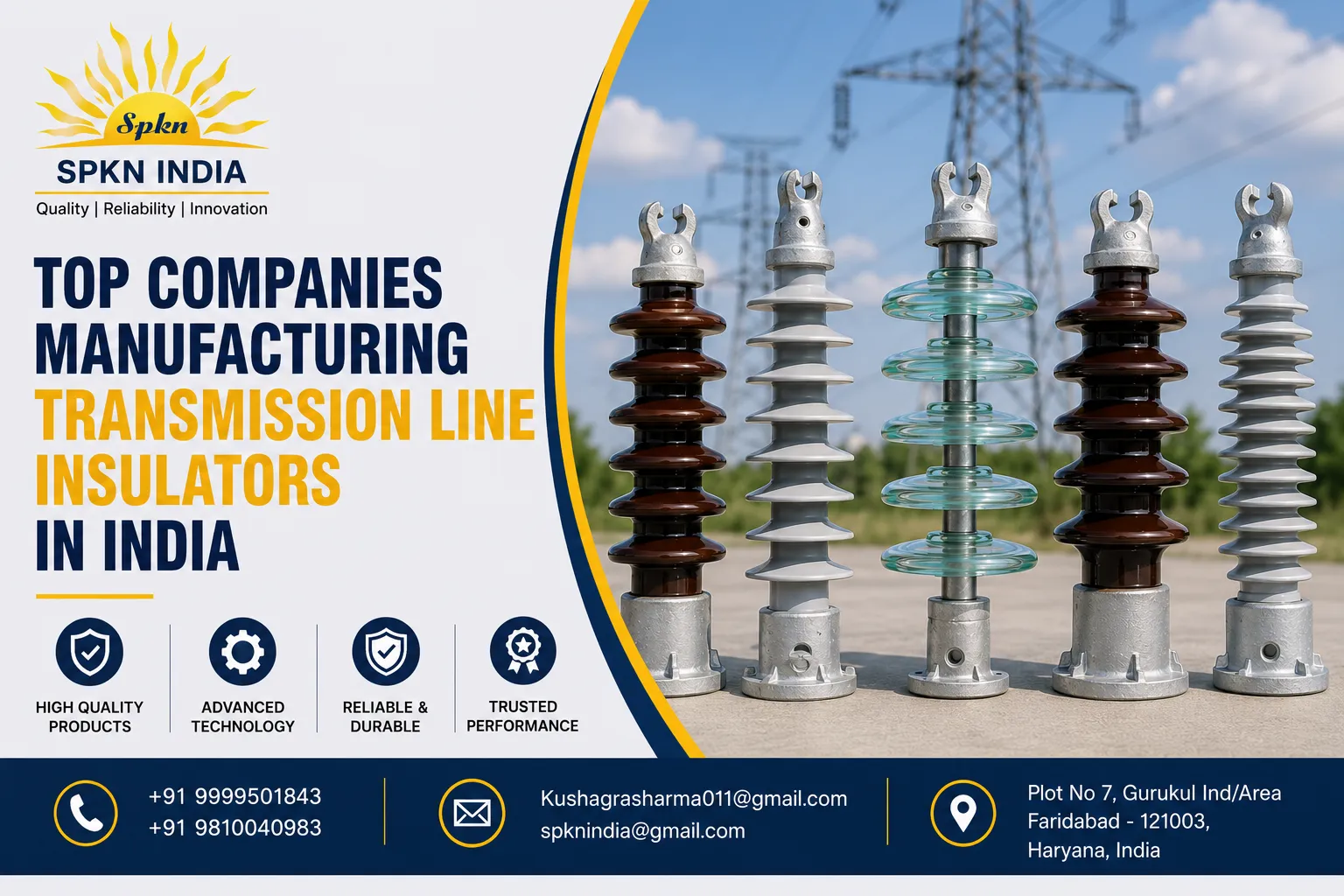
Without a properly rated insulator, a transmission line simply cannot function safely. The insulator is the single component standing between an energized conductor and a grounded steel tower, which is why the manufacturing quality behind it deserves far more scrutiny than it typically receives during procurement.
A Short History of Insulator Development in Indian Transmission Networks
Early Indian transmission networks relied almost entirely on porcelain pin and disc insulators, following designs adapted from British and European practice during the mid-twentieth century grid expansion. Toughened glass disc insulators gained popularity through the 1970s and 1980s because of their self-indicating failure characteristic, where a cracked unit shatters visibly rather than failing silently.
Composite polymer insulators entered the Indian market more prominently from the 1990s onward, as Power Grid and state transmission utilities began specifying lighter weight alternatives for high pollution zones and difficult terrain where tower loading and transport logistics mattered. Today, all three categories remain in active use, each suited to different application conditions.
Understanding the Technology Behind Modern Insulators
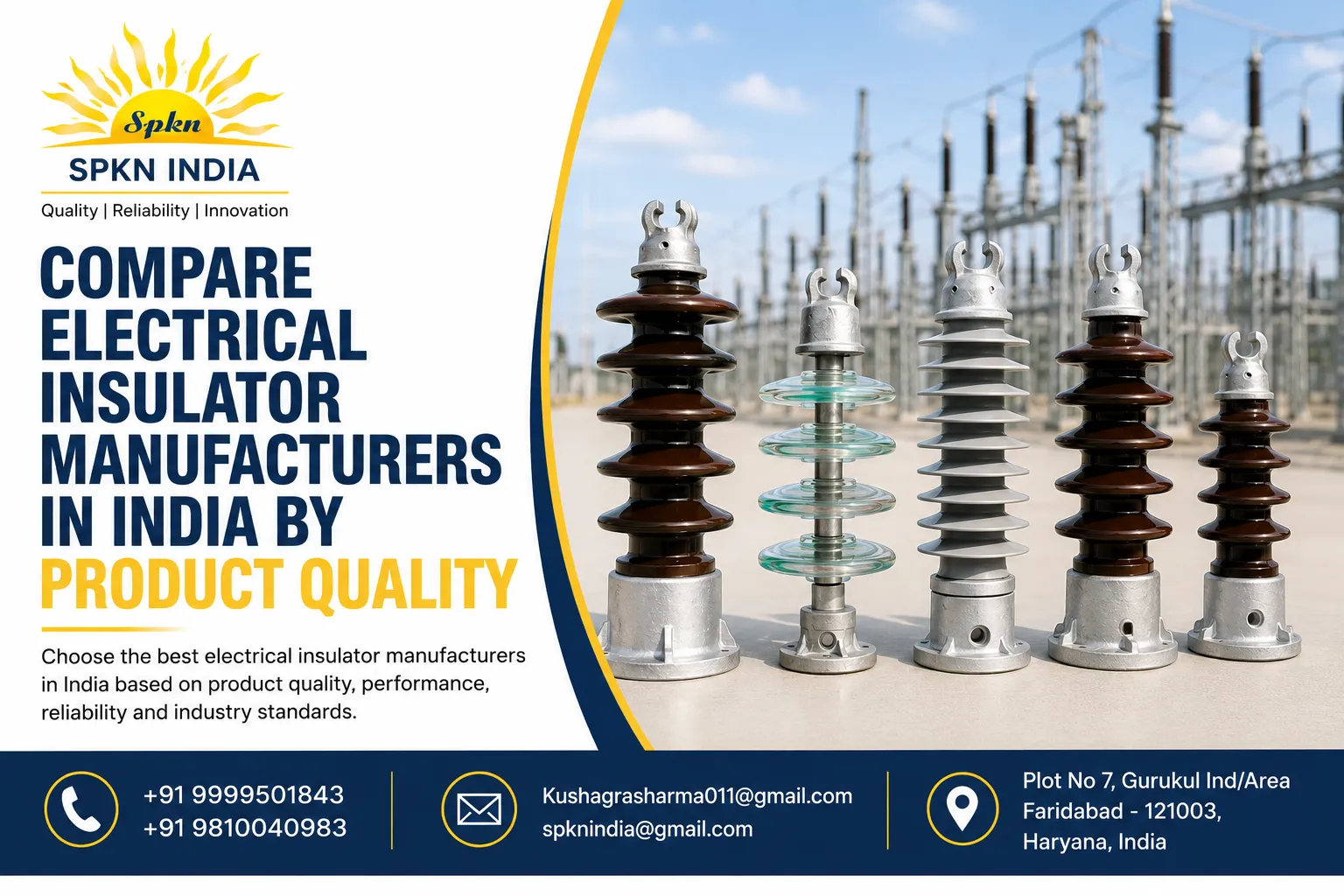
Porcelain Disc Insulators
Fired ceramic units assembled into strings for suspension or tension applications. Reliable long-term performance record but heavier and more prone to hidden internal cracking that is not visible during routine inspection.
Toughened Glass Disc Insulators
Similar mechanical application to porcelain but manufactured from thermally toughened glass. A key advantage is self-clearing failure behavior, since a damaged unit shatters into small fragments that remain held by the metal cap and pin, making failed units easy to spot during line patrol.
Composite (Polymer) Insulators
Built around a fiberglass reinforced core rod with silicone rubber sheds molded over it. Significantly lighter than porcelain or glass equivalents, which reduces tower loading and simplifies handling during installation, particularly on difficult terrain or river crossing towers.
Types of Insulators Used Across Transmission Line Applications
Understanding the different types of insulators in transmission lines helps clarify why manufacturers cannot rely on a single design for every application.
| Insulator Type | Primary Function | Common Application |
|---|---|---|
| Pin Insulator | Supports conductor at a fixed point | Lower voltage lines, generally up to 33kV |
| Disc (Suspension) Insulator | Supports conductor hanging vertically from the tower crossarm | Straight line sections on transmission towers |
| Strain (Tension) Insulator | Holds conductor under full tension | Line angles, dead ends, river crossings |
| Post Insulator | Rigid support, no articulation | Substation busbar support, some line applications |
| Shackle Insulator | Small scale insulation for low tension applications | Distribution level, service connections |
In my experience walking transmission corridors during route surveys, the choice between disc and composite strain insulators at angle towers often comes down to tower loading capacity as much as electrical requirement, since composite units reduce the mechanical burden on older tower structures during upgrade projects.
What Actually Distinguishes a Top Manufacturer
Rather than ranking companies by name, which shifts constantly with new entrants and changing capacity, it is far more useful for engineers and procurement teams to understand the specific criteria that separate a genuinely capable insulator for transmission line manufacturer from one that simply meets minimum paperwork requirements.
Criteria that matter:
- Valid BIS licensing for the specific insulator type and voltage class being purchased
- Access to a NABL accredited or government-approved testing laboratory, either in-house or through partnership
- Documented type test reports as per IS 731, IS 5350, and IEC 60383, matching the exact design being supplied, not an older or unrelated design
- Batch traceability, meaning every unit can be traced back to a specific production batch and test record
- A track record of supply to DISCOMs, Power Grid, or established EPC contractors, with verifiable reference projects
- Post-supply technical support for selection, string assembly guidance, and field issue resolution
A manufacturer that can produce clear, current documentation against every one of these points is doing far more to earn trust than one relying on brand age or marketing claims alone.
Industry Standards Governing Transmission Line Insulator Quality
- IS 731 covers porcelain insulators for overhead power lines with a nominal voltage greater than 1000V
- IS 5350 addresses porcelain and toughened glass insulator units for string insulators
- IEC 60383 provides international specification for ceramic and glass insulators for overhead lines
- IEC 61109 governs composite suspension and tension insulators for AC systems above 1000V
- CBIP guidelines offer practical creepage distance and pollution severity recommendations tailored to Indian conditions
- CEA guidelines define technical standards relevant to construction and safety of electric lines, including insulator clearance requirements
Selection Factors Engineers Should Prioritize
Pollution Severity Zone
Coastal, industrial, and desert dust corridors require higher creepage distance per kV than clean rural inland routes. Using a standard creepage rating in a heavy pollution zone is one of the most common causes of premature flashover failures.
Mechanical Loading Requirement
Suspension applications need adequate mechanical failing load rating for the conductor tension and span involved, while strain applications at angle towers require significantly higher rated strength.
Voltage Class and Insulation Coordination
The insulator string length and unit count must be coordinated with the system's insulation coordination study, accounting for switching surge and lightning impulse withstand requirements at that voltage class.
Environmental and Handling Considerations
Composite insulators offer weight advantages during transport and installation on difficult terrain, while porcelain and glass remain preferred in some utility specifications due to decades of established field performance data.
Installation Best Practices for Insulator Strings
- Verify string length and unit count against the approved design before installation, not after
- Use manufacturer-specified torque values when assembling ball and socket or clevis connections
- Inspect each unit visually for shipping damage before it goes up the tower, since a cracked unit installed at height is far more costly to replace later
- Confirm correct orientation for composite insulators, since incorrect shed orientation can affect pollution flashover performance
- Maintain proper hardware galvanizing standards on all metal fittings to prevent premature corrosion at the tower connection point
Testing Procedures Before and After Installation
Before dispatch, reputable manufacturers conduct routine tests on every batch, including power frequency withstand voltage tests and visual and dimensional checks. Type tests, conducted once per design on a sample basis, include impulse voltage withstand, mechanical failing load, and for composite units, additional tests such as tracking and erosion resistance under accelerated weathering conditions.
After installation, periodic testing includes:
- Insulator resistance measurement using a specialized insulator tester during live line conditions by trained personnel
- Infrared thermography to detect abnormal heating that may indicate internal defects
- Visual patrol inspection for cracking, contamination buildup, or physical damage
Safety warning: any testing or inspection activity involving energized insulators on transmission lines must be carried out only by trained personnel following approved live line working procedures and appropriate approach distance protocols.
Maintenance Checklist for Long-Term Reliability
- Annual visual inspection during scheduled line patrol
- Contamination severity assessment in coastal or industrial corridors, with washing or replacement scheduled accordingly
- Infrared thermography during periodic maintenance windows
- Hardware fitting corrosion check at the tower connection point
- For composite insulators, periodic hydrophobicity assessment to detect surface degradation before it affects flashover performance
Common Mistakes When Sourcing Transmission Line Insulators
- Assuming all insulators of the same voltage rating are interchangeable regardless of manufacturer
- Overlooking pollution zone specific creepage distance requirements during specification
- Not requesting current type test reports matching the exact design being purchased
- Ignoring mechanical failing load requirements at angle and dead end towers
- Selecting based on lowest quoted rate without verifying batch traceability and quality documentation
Future Trends in Insulator Manufacturing
Manufacturers are increasingly investing in improved silicone rubber formulations that offer better long-term hydrophobicity retention for composite insulators, along with digital batch tracking systems that allow utilities to trace any field-installed unit back to its exact production and test record. Some utilities are also beginning to specify condition monitoring compatible hardware for insulator strings on critical high voltage corridors, aligning with broader Power Grid digitalization initiatives.
Why Manufacturer Credibility Matters More Than Brand Recognition Alone
A recognizable brand name does not automatically guarantee that the specific batch being purchased meets current type test standards. What genuinely protects a project is verifiable, current documentation for the exact insulator model and rating, combined with a manufacturer's demonstrated ability to support technical evaluation and after-sales queries.
SPKN India manufactures and supplies overhead line insulators alongside complementary transmission and substation equipment including Electrical Isolators, Air Break Switches, GOAB Switches, Lightning Arresters, and Transmission Line Hardware, supporting EPC contractors and utilities that require documented, standards-compliant equipment for transmission line projects. For projects also sourcing Earthing equipment, Drop Out Fuse, or Switch Disconnectors, working with a supplier familiar with the full range of transmission and substation components often simplifies technical coordination across a project.
Conclusion
Identifying a genuinely capable manufacturer of transmission line insulators in India comes down to verifiable evidence rather than brand familiarity. Valid BIS licensing, current type test documentation, batch traceability, and a proven supply track record with DISCOMs or EPC contractors tell engineers and procurement teams far more than a product catalogue ever will. For transmission line projects where reliability over several decades of service is the actual goal, treating insulator sourcing as a documented technical evaluation protects both project timelines and long-term line performance. SPKN India supports EPC contractors and utilities with insulators and related transmission equipment backed by proper technical documentation for projects across India.